Home
SAP
The 2026 Guide to SAP Procurement Automation: Moving from Digital to Autonomous
Author
František Hás
February 7, 2026
Executive Summary: The Death of the "Manual Bridge" In the previous decade, "automation" simply meant replacing a paper form with a digital one. In 2026, that is no longer enough. For enterprises running SAP, the "automation gap"—the manual effort required to move data between procurement activities and the ERP—is a primary driver of operational friction. The highest-performing finance teams have moved beyond basic workflows into Autonomous P2P. This article outlines the essential capabilities of modern SAP automation software and provides a scorecard to evaluate your current maturity.
The "Cost of Inaction": Why Standard SAP Workflows Stagnate
SAP is a powerful engine, but it is often "user-hostile" for the casual requester. When an Operations Manager needs a specialized spare part or a marketing lead needs a new agency, the complexity of SAP ECC or S/4HANA often leads to Maverick Spend.
The Hidden Costs of Legacy P2P:
The "Tax" on Talent: High-salary accountants spending 15 hours a week performing "data janitor" work (manual matching).
Lack of Spend Agility: If it takes three weeks to approve a vendor, your business cannot pivot to market changes.
Data Decay: Invoices entered manually into SAP have a 78% higher error rate, leading to duplicate payments and soured vendor relationships.
The P2P Maturity Model (2026 Edition)
Where does your organization sit on the scale of automation? Most SAP users find themselves stuck at Level 2.
Level 1: Manual
Characteristics: Reliance on paper or PDF invoices and manual email-based approval chains.
SAP Interaction: Requires manual data entry of every line item into the SAP system.
Level 2: Digital
Characteristics: Implementation of OCR (Optical Character Recognition) to scan invoices and basic digital workflows for routing.
SAP Interaction: Data is moved via periodic batch uploads into SAP rather than real-time entry.
Level 3: Integrated
Characteristics: Real-time data synchronization across platforms and the ability to perform approvals via mobile devices.
SAP Interaction: Features a direct API connection with bi-directional communication, ensuring SAP and the AP tool are always in sync.
Level 4: Autonomous
Characteristics: Agentic AI proactively handles 3-way matching (PO, Goods Receipt, and Invoice) and identifies anomalies without human intervention.
SAP Interaction: "Touchless Posting" occurs automatically; SAP functions as a silent ledger that records transactions without needing manual oversight.
INSIO is designed to catapult enterprises from Level 2 directly to Level 4.
5 "Non-Negotiable" Features of SAP Automation Software
If you are evaluating software to sit on top of your SAP environment, it must possess these five 2026-standard capabilities:
1. Agentic AI Matching (The "Extractor" Evolution)
Old-school OCR (Optical Character Recognition) is dead. Modern software uses Large Language Models (LLMs) to understand the context of an invoice.
Example: The system understands that "Freight Charges" on an invoice should be mapped to a specific SAP GL account, even if that term isn't explicitly on the Purchase Order.
2. Predictive Budget Guardrails
Standard SAP tells you that you are over budget after you try to post the invoice. Best-in-class automation handles this part of the process the Requisition phase. If a department head tries to buy hardware that exceeds the remaining quarterly budget, the system flags it before the commitment is even made.
3. "Clean Core" Synchronization
You should never modify the SAP "Core" to accommodate a P2P tool. The best software uses a Side-by-Side extension model via high-speed REST APIs. This ensures that when you upgrade from ECC to S/4HANA (or apply a patch), your procurement workflows don't break.
4. Vendor Self-Service & Onboarding
Automation should extend outside your walls. Modern tools provide a portal where users can upload vendor ISO certificates, tax IDs, and bank details. Once validated by the software, this data is pushed into the SAP Vendor Master automatically.
5. Mobile-First Executive UX
A CFO should be able to approve a $500k capital expenditure from a smartwatch or smartphone with full visibility into the "Audit Trail" and "Budget Impact" in one tap.
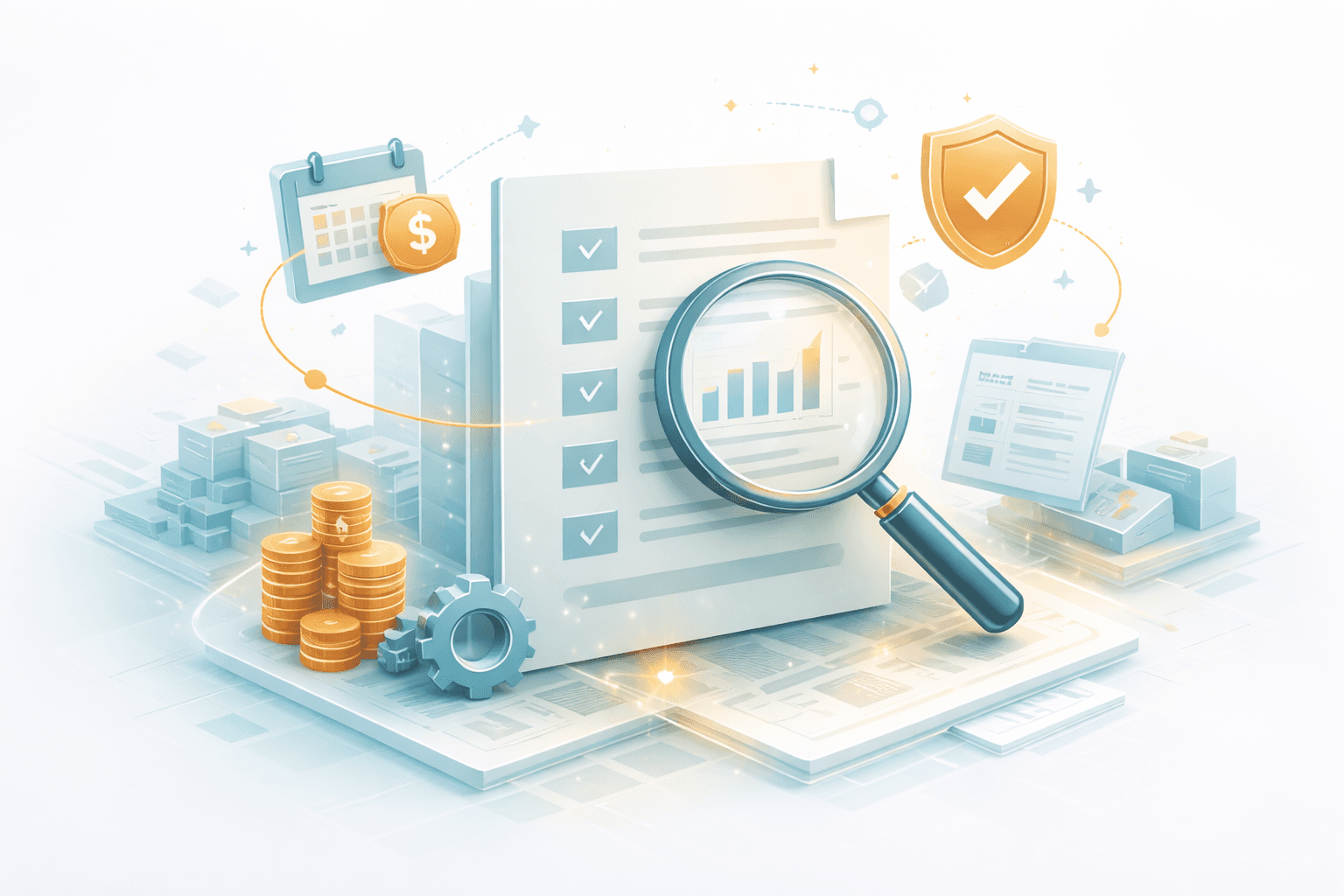
The 2026 P2P Automation Audit (Checklist)
Use this scorecard to evaluate your current SAP procurement process. If you check fewer than 5 boxes, your "Corporate Chaos" level is high.
Invisible Integration: Does data flow between your P2P tool and SAP without any manual CSV exports or "sync buttons"?
Touchless Ratio: Can at least 80% of your invoices go from "Received" to "Ready for Payment" without a human touching them?
Duplicate Detection: Does the system automatically flag duplicate invoices based on "intent" (e.g., different invoice numbers but same purchase order)?
PO-to-Invoice 3-Way Match: Does the software automatically verify the Invoice against both the Purchase Order and the Goods Receipt?
Zero-Training Interface: Could a new employee raise a request without reading a 50-page SAP manual?
Audit Readiness: Can you pull a complete "Life of a Transaction" report (from request to payment) in under 60 seconds?
Why INSIO is the Strategic Choice for SAP Automation
While "Big Tech" solutions are often bogged down by legacy code, INSIO was built for the API-first era.
"Automation is not about doing the same things faster; it’s about removing the things you shouldn't be doing at all."
For the Operations Manager, INSIO removes the "noise" of manual errors. For the CFO, it provides a "Clean Core" that makes financial reporting effortless. By acting as a sophisticated "front-end" for SAP, INSIO ensures that your ERP remains the Single Source of Truth while your employees enjoy the agility of a modern SaaS app.
Conclusion: Complexity is a Choice
In 2026, continuing to use manual or semi-automated P2P workflows is a strategic choice—one that costs your company in terms of both capital and culture. Transitioning to an autonomous solution like INSIO, integrated deeply with SAP, allows your organization to scale without adding headcount.